

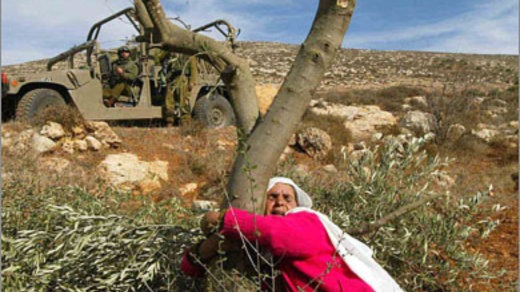
Iconic Image by Nasser Shiyoukhi - AP, 2005.
On International Women’s Day, we reaffirm that the struggle for gender justice is inseparable from the struggle against colonialism, racism, and systems of domination. Palestine is a feminist issue. Palestinian women’s lives are shaped by the intersecting realities of Israel’s unlawful occupation, settler-colonial apartheid regime, and ongoing genocidal violence.
On both sides of the Green Line, Palestinian women experience the gendered impacts of Israel’s apartheid regime that isolates communities, entrenches structural racial discrimination, restricts fundamental freedoms, including movement, association and assembly, and destroys homes, property and livelihoods. Israel’s policies of territorial fragmentation, settlement expansion, home demolitions and forced displacement place profound burdens on women, who are often responsible for maintaining households and caring for children, the elderly, and the injured under conditions of severe insecurity. Israeli Occupying Forces (IOF) and settler violence destabilises family life and livelihoods, forcing women to shoulder the emotional, economic, and physical consequences of a system designed to destroy the Palestinian people.
In Gaza, Israel’s ongoing genocidal campaign has made these gendered harms devastatingly visible. Women and children make up the majority of those killed and injured in Israeli attacks. The Israeli Occupation Forces intentionally target residential areas and critical civilian infrastructure to cause mass women and children casualties. As a result, during the first month of Israel’s genocidal campaign in Gaza, more than nine out of ten women and children killed were in residential buildings, and 95 percent of women were killed together with at least one child.
Over two years later, 92 percent of Gaza’s residential buildings have been damaged or destroyed through incessant Israeli bombing. Entire families have been wiped out, turning women throughout Gaza into both the victims and survivors of an environment calculated for their destruction. Surviving amid mass devastation is a daily challenge, compounded by their repeated forced displacement, denial of food, shelter, medical care and all aspects of human dignity. They are now left – without intervention by the international community – subjected to a perpetual foreign occupation under Trump’s ‘20-point plan’.
For pregnant, postpartum and breastfeeding women, Israel’s creation of conditions calculated to destroy the Palestinian people are particularly catastrophic. Israel’s creation of a manmade famine and environment of total scarcity poses disproportionate harm to pregnant, postpartum and breastfeeding women that require proper nutrition and a higher caloric intake. This causes them to experience prolonged hunger, dehydration, and micronutrient deficiencies that directly undermine foetal development and subsequent maternal health.
Israel’s systematic targeting and destruction of hospitals, maternity wards, and reproductive healthcare facilities – combined with the restriction of fuel, electricity, medicines, and medical supplies – has rendered pregnancy and childbirth life-threatening for both woman and baby. Women have been forced to give birth in overcrowded shelters, tents, and makeshift facilities without anaesthesia, sanitation, or adequate medical care. Those who reached hospitals frequently required medical interventions, including caesarean sections, due to malnutrition-related complications –yet essential supplies were unavailable. This has led to preventable maternal deaths, miscarriages, and premature births – all of which have increased dramatically as the healthcare system collapses under Israel’s deliberate attack.
The psychological toll of such experiences remains unaccounted for. However, with a recent study in the United Kingdom revealing that, under ordinary circumstances, one in three women experience labour as traumatic – usually due to during birth, poor care or mistreatment leading to long-term consequences for the mental health of mothers, including flashbacks, nightmares and negative thoughts, emotional detachment and a tendency to avoid reminders of the birth – the existence of widespread, serious and irreparable mental harm inflicted on Palestinian women is irrefutable.
Postpartum women in Gaza face hunger, dehydration, and the absence of clean water and sanitation, undermining recovery and jeopardising their ability to breastfeed and care for their newborns. Mothers have been forced to witness the preventable deaths of their babies, due to hypothermia, deprived of adequate shelter and essentials for winter under the Israeli siege.
Across the OPT, Palestinian women also face gender-specific violence at the hands of the IOF and illegally transferred in settlers. Reports document forced nudity, including forced removal of the veil, invasive strip searches, sexual harassment, and degrading treatment during arrests and detention. Such gender-based violence is designed to not only harm individual women but to also humiliate families and communities, as a tool of racial domination and oppression within Israel’s settler-colonial apartheid system.
Taken together, these practices represent a systematic assault on Palestinian women’s lives, dignity, and reproductive autonomy. The destruction of healthcare systems, the imposition of starvation and displacement, and the use of gender-based violence are not incidental to Israel’s regime, they are mechanisms through which it seeks to fracture Palestinian society and undermine the collective survival of the Palestinian people and their struggle for self-determination.
Despite these overwhelming challenges, Palestinian women remain at the forefront of resistance, resilience, and community care. They continue to organise, document violations, support one another, and defend their land, rights, and future amidst Israel’s ongoing Nakba and pursuit of Palestinian erasure.
Recognising that Palestine is a feminist issue means acknowledging that gender justice cannot be realised while Palestinian women are subjected to unlawful occupation, apartheid, and genocide.
"A heartfelt salute to all our female colleagues at Al-Haq, our women partners, the women in the communities we strive to support and protect, and to all the brave and resilient women around the world. Together, we stand united in our collective fight for a better, safer, and more just world."