

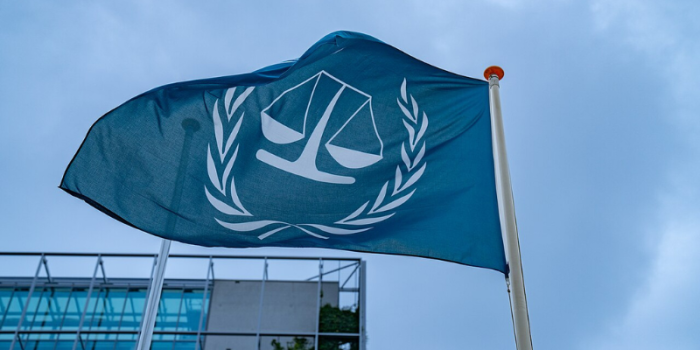
Photo: Tony Webster
In the span of two months, five States, Mali, Burkina Faso, Niger, Venezuela, and Chad, have announced their withdrawal from the Rome Statute, which will take effect one year after their notification is deposited with the United Nations (UN). The Coalition for the International Criminal Court (CICC), together with more than 133 non-governmental organisations (NGOs), calls on States Parties, international and regional organisations, the International Criminal Court (ICC) and civil society to mount a collective response to halt these withdrawals and stand against the new US campaign, to preserve victims’ and survivors’ access to justice and reparations.
In September 2025, Mali, Niger, and Burkina Faso announced their intention to withdraw from the ICC. The three countries, members of the Alliance of Sahel States (AES), formally notified UN Secretary-General António Guterres of their withdrawal from the Rome Statute in June 2026. They have accused the ICC, among other things, of pursuing a selective prosecutorial policy against the Global South. On Friday, 24 July 2026, Venezuela also announced that it had notified the Secretary-General of its withdrawal from the Rome Statute. This was followed on Monday, 27 July, by Chad, whose decision has reportedly been linked to a US request to review its membership to the Court.
The withdrawals by Venezuela and Chad come amid a renewed US campaign to “dismantle the ICC brick by brick” in order to prevent any investigation or prosecution of US nationals and their allies, including Israel. This campaign includes diplomatic pressure urging States to withdraw from the Rome Statute and threatening to reduce or withdraw foreign and security assistance from countries that continue to support the Court. The objective of this campaign is clear: to secure impunity for international crimes committed by the United States and its allies.
These are critical times: victims of the most serious crimes need effective access to justice more than ever, yet the ICC, its judges and organisations cooperating with it are under unprecedented and sustained attack. In this context, any disengagement from the ICC weakens the fight against impunity, undermines the prevention of the gravest crimes, and erodes victims’ rights to justice, truth, and reparations.
Withdrawals not only create safe havens for ICC fugitives, they also increase the risks of war crimes, crimes against humanity and genocide being committed with impunity on the territory of withdrawing States or by their nationals, gravely limiting the possibility of justice for victims. Furthermore, they undermine cooperation with the Court, including access to victims and witnesses, and the arrest and surrender of alleged perpetrators.
The CICC and undersigned organisations recognise the necessity of ensuring fairness in the international criminal justice system, safeguarding judicial independence, and truthfully addressing concerns about selectivity in the administration of justice. It is equally important to ensure those allegedly responsible for international crimes are held to account, regardless of their nationality. Yet, these withdrawals come at a time when the Office of the Prosecutor has significantly expanded the geographical scope of its investigations beyond Africa, including in Palestine, the Philippines, Ukraine, Myanmar/Bangladesh, Afghanistan, Venezuela, and elsewhere. Furthermore, it has sought arrest warrants against leaders of powerful States and their allies, notably the Russian and Israeli Heads of State, and charges were recently confirmed against the former Filipino Head of State. Concerns regarding selectivity should be addressed through constructive dialogue within the Assembly of States Parties and, mindful of its fully independent mandate, the Court, rather than through unilateral withdrawals.
The CICC and the undersigned organisations urge Mali, Burkina Faso, Niger, Venezuela, and Chad to reverse their decisions by immediately withdrawing their notifications, following Hungary’s example earlier this year. They also urge the United States to halt its campaign, revoke the sanctions, and stop its attacks against the independence of justice.
Victims and survivors deserve concrete progress towards accountability, truth and reparations, and must be supported in their quest for justice. The promise made to victims nearly 30 years ago in Rome that impunity would no longer be the norm cannot be derailed by one State, no matter how powerful. The international community must discharge its duty to safeguard that promise, for the benefit of victims, survivors and humanity.
To this end, the signatories call for:
-
Revoke their notifications of withdrawal before the expiration of the one-year period provided for under Article 127 of the Rome Statute.
-
Maintain their engagement and full cooperation with the ICC, including ensuring access to victims and witnesses in their territory, and the arrest and surrender of suspects.
-
Immediately halt its campaign against the ICC, revoke all ICC-related sanctions, and stop its attacks against the independence of justice.
-
Intensify diplomatic efforts, individually and through regional organisations and groupings, to seek withdrawal of the current notifications; prevent further withdrawals; reaffirm that concerns about the ICC’s prosecutorial policy should be addressed through dialogue and cooperation; and support States that are most vulnerable to the US campaign.
-
Denounce the unlawful US sanctions and campaign against the ICC and those cooperating with it publicly and firmly, and reaffirm their support for the Rome Statute system, both individually and collectively through the Assembly of States Parties (ASP), regional organisations, and at the UN General Assembly.
-
Continue to engage bilaterally with the US Administration to call for an end to the campaign, the revocation of existing sanctions and no further designations.
-
Support and protect national coalitions, civil society organisations and human rights defenders working to advance international justice, particularly in Mali, Niger, Burkina Faso, Venezuela, and Chad, and those targeted with unlawful sanctions.
-
Publicly and clearly oppose any initiatives aimed at weakening the Court, including attempts to amend the Rome Statute to limit its jurisdiction or independence and attempts to influence prosecutorial priorities, including efforts to sideline specific investigations, such as Venezuela, Afghanistan, or Palestine.
-
Not bow to political pressure or campaigns aimed at undermining the independence of the Court when exercising their voting rights in the ASP.
-
Continue cooperating fully with the ICC and comply with their international obligations, including by arresting and surrendering to the Court any person subject to an ICC arrest warrant, without selectivity.
-
Continue reaffirming, through the Office of the Prosecutor, that its prosecutorial policy is guided by the principles of independence, impartiality, and non-selectivity; continue investigating and prosecuting those most responsible for international crimes regardless of their nationality; and communicate, where appropriate, the progress of its work in ongoing investigations to reinforce deterrence and maintain victims’ confidence in international justice.
-
Reaffirm that the withdrawals do not affect the Court's jurisdiction over crimes allegedly committed prior to the effective date of withdrawal.
-
Intensify its outreach efforts, including in preliminary examination countries, to counter misinformation, prevent further violations, deter the commission of further crimes, and continue its engagement with victims and affected communities to sustain their confidence in international justice.
Read this statement in Français or Español.
View the full list of signatories.