

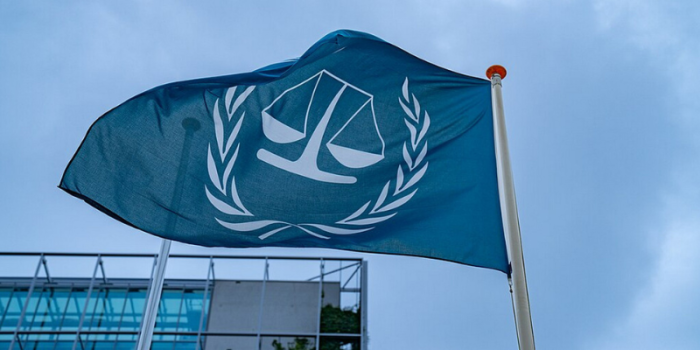
The Palestinian Human Rights Organisations Council (PHROC), and the Palestinian NGO Network (PNGO), representing over 140 organisations, express deep concern and regret at the manner by which the integrity and functioning of the International Criminal Court is being undermined by the failure of the institution, its Assembly of States Parties (ASP), and particularly the ASP’s Bureau, to coherently respond to disciplinary proceedings relating to the current Chief Prosecutor Karim Khan. While our organisations take no position on either the validity of the claims or the defence, we warn that the denial of due process in the disciplinary proceedings breaches basic human rights guarantees. This dangerously opens the Court to political overreach, representing a grave departure from the rule of law.
Given the fresh waves of attacks against the court from US Secretary of State, Marco Rubio, and unwarranted political interference by the Bureau in subverting the disciplinary process, we urge Member States of the ASP to protect the independence of the International Criminal Court, and in particular, the independence of the Prosecutor.
In May 2024, the ICC’s Independent Oversight Mechanism (IOM) was notified of allegations of sexual misconduct against Chief Prosecutor Khan and was seized of the matter on the basis of a third party request and also subsequently on the basis of a request by the Prosecutor. This complaints process, provided for under Article 112 of the Rome Statute, was subsequently abandoned for the creation of an external investigation process to the United Nations Office of the Internal Oversight Services–– “an arrangement without statutory basis”.
In November 2024, the ASP Presidency announced the establishment of the external investigation, “in order to ensure a fully independent, impartial and fair process”. That investigation was undertaken by the UN Office of Internal Oversight Services (OIOS) and concluded with a substantial 150-page report based on 5,000 pages of evidence. Notably, UN OIOS disciplinary investigations use a lower standard of proof –– operating on the establishment of “clear and convincing proof”, meaning that the “truth of the facts asserted is highly probable”–– while the Court, which is subject to the jurisdiction of the International Labour Organisation Administrative Tribunal (ILOAT), requires “proof beyond reasonable doubt”.
In December 2025, the Assembly of States Parties, amended the rules to investigate and remove elected officials at the 24th session in the Hague, substantially modifying Rules of Procedure 26-30 and Rules of Procedure of the Assembly 81 and 82. Even at this point, the constant changing of the rules governing the evolution of the disciplinary process were criticised as going “against every stalwart of a court of law”.
In June 2025 the Presidency of the ASP, and the Bureau, announced that the fact-finding investigative report into alleged misconduct by the Prosecutor conducted by the Office of Internal Oversight Services (OIOS), would, when received, be assigned to an external Panel of Judicial Experts, and that this panel “will conduct an assessment under the legal framework of the Rome Statute, the Rules of Procedure and Evidence of the Court and relevant administrative instruments, in assistance of the Bureau’s consideration of the appropriate next steps”. Three eminent senior Judges, were appointed to independently conduct the legal assessment: Paul Lemmens, former judge in the Belgian Council of State and European Court of Human Rights; Seymour Panton, retired president of the Court of Appeal of Jamaica; and Leona Theron, a judge of the Constitutional Court of South Africa.
Cognisant that our organisations cannot verify media or other commentary –– a review of relevant and available material indicates that the external panel of independent Judges unanimously concluded that there was insufficient evidence that the Chief Prosecutor's conduct amounted to misconduct or a breach of duty. Their 85-page legal assessment of the OIOS investigative report, carried out over three months, outlined that the investigation revealed two entirely conflicting accounts, and that much of the evidence was hearsay. Due to the “many unresolved factual disputes” the Panel found that any attempts to characterise the findings would be “almost destined for fruitlessness” since there was “little that is capable of being legally characterised”.
Rule 81 of the Rules of Procedure of the Assembly of States Parties, on the “Removal and suspension from office of a judge, the Prosecutor or a Deputy Prosecutor” sets out the procedure for removing or suspending a Prosecutor:
“The President of the Bureau of the Assembly of States Parties shall convene a meeting of the Bureau and circulate among its members the final report of the ad hoc panel together with the investigation report, and its underlying evidence, if applicable, upon receipt of advice of the ad hoc panel that the factual findings by the Independent Oversight Mechanism or the external investigator, as applicable, legally characterize as serious misconduct or serious breach of duty in the case of the Prosecutor. After having gathered, in accordance with the common provisions on procedural fairness . . . the Bureau shall recommend to the Assembly whether to follow the advice of the ad hoc panel, including its reasoning for disagreement, if applicable”. (emphasis added)
There has been no legal characterisation by an ad hoc panel that the factual findings of the investigation amount to serious misconduct or serious breach of duty in the case of the Prosecutor. The Panel concluded that while it “cannot make a definitive proclamation on the existence or absence of the alleged misconduct, given its mandate, it finds itself compelled to the conclusion that on the materials disclosed, there is insufficient evidence to support a finding of misconduct measured against the standard of proof of beyond reasonable doubt”.
While arguments that the standard of “beyond reasonable doubt” should be lowered in cases of alleged sexual harassment, our organisations caution that disciplinary proceedings must be carried out with legal certainty. This principle is foundational to the rule of law. Creating new rules throughout the process at whim, creates injustices within the system, which operates on consistency and legitimate expectation. Further given the gravity of such claims, with potentially criminal implications, and the potential weaponisation of such claims to subvert and remove the Prosecutor or other high-ranking officials from office, it is appropriate that a high evidentiary threshold is maintained.
Less than four weeks later, on 8 June 2026, the Bureau, a political body which consists of a President, two Vice-Presidents and 18 Member States of the International Criminal Court voting by qualified majority: made a decision on the disciplinary proceedings involving the Prosecutor; referred the disciplinary proceedings to the Assembly of States Parties; decided to suspend the Prosecutor from duty with immediate effect; and decided to convene a special session of the Assembly of States Parties, as soon as possible, in order for the Assembly to consider the matter.
The decision of the political Bureau––Belgium, Bolivia, Brazil, Chile, Cyprus, Ecuador, Finland, Italy, Japan, Latvia, New Zealand, Poland, Slovenia, South Korea and Switzerland; Uganda and Bosnia and Herzegovina abstained; and Senegal, South Africa, Kenya and Sierra Leone voted against–– side-stepped the legal findings of the Panel of Judges, and reportedly concluded that Karim Khan had committed “serious misconduct”, that the Prosecutor had “engaged in a sexual relationship” with the complainant, and that “in the context of that power imbalance a sexual relationship could never be appropriate”. The political Bureau failing to establish “non-consensual sexual conduct”, found instead that a consensual relationship was serious misconduct–– a relationship which neither Karim Khan and nor the complainant had reportedly ever claimed.
While our organisations have a zero tolerance policy on sexual harassment and abuse of authority, we equally affirm that all allegations must be addressed through a fair, impartial, and transparent process in which due process is fully respected.
Notably, the Bureau, as a political body composed of diplomats, does not have the independence, impartiality or legal expertise to make assessments on the legal characterisation of conduct, nor did it enjoy the same timeframe as the ad hoc Panel to independently examine the two reports and 5,000-pages of evidence, with legal experts warning that “[t]he spectre of a show trial looms large”. The decision of the Bureau, as a political body to disregard the legal report of the eminent Judges, carrying out instead a political investigation, has been further castigated by the President of the Paris Bar, representing 37,000 lawyers in a letter to the President of the Assembly of States Parties, and the African Bar Association–– the latter cautioning, that “any departure by a political body from the reasoned conclusions of experienced judges could undermine the institutional credibility of the Court and weaken confidence in the rule of law” creating the perception that the “Court and its governing bodies are influenced by political considerations rather than legal principles”.
The process has been further marred by the Bureau’s rushed amendments of the voting procedure at the Assembly of States Parties, to fast-track potential removal of Karim Khan from office. The amendment has closed off the legally and procedurally required two-step voting, which would have required a substantial 2/3 majority vote to establish serious misconduct, followed by a second, absolute majority vote of 63 states to remove the Prosecutor. The alteration of the process, removes the 2/3 majority vote, which would have been difficult to achieve, thereby reducing the voting threshold for removing the Prosecutor, and dismantling important checks and balances on the political decision-making of the Bureau.
Our organisations' position has been, and remains, that disciplinary proceedings arising from complaints must be processed by way of an established legal process, and that such process must be allowed to operate independently of political interference from States, including States Parties. As recognised in the Final Report of Independent Expert Review of the International Criminal Court and the Rome Statute System, potential disciplinary proceedings against the institution’s personnel are a necessary and foreseeable element in any international organisation, and claims of sexual and other misconduct must be treated with the utmost gravity, and investigated with full rights of due process accorded to both claimant and respondent. At the same time, the function and independence of the Prosecutor, must be guarded against arbitrary political attacks and unwarranted interference by States.
We recall that direct threats have been communicated to the Prosecutor that, “[t]hey will destroy you and they will destroy the court”. Both the previous Chief Prosecutor, and the present Chief Prosecutor, have reported being threatened by Israel. The Prosecutor has already been sanctioned under US Executive Order 14203 for his decision to request arrest warrants for Israel’s Prime Minister Netanyahu and former Minister of Defence, Yoav Gallant.
Prosecutorial independence is a fundamental pillar of the entire Rome Statute framework, guaranteed and obligated under Article 42 of the Statute. Permitting states to decide by a vote at the Assembly of States Parties, in the absence of an adhered to procedure, and on invariably political grounds, whether to retain or to dismiss the ICC’s Chief Prosecutor, represents a clear and direct breach of the prosecutorial independence built into the Rome Statute. We recall distinct, yet familiar, overreach by States Parties in 2019, during the process of nominating a new Chief Prosecutor–– a process also characterised by extensive leaks. Then the ASP Bureau had appointed a Committee to Elect the Prosecutor (CEP), whose recommendations were side-lined by States Parties who wished greater political influence in decision-making.
The politicisation of the present process is evident in the manner by which a disciplinary investigation, which by rights should have been marked by the highest levels of integrity and process, having due regard for the rights and responsibilities of all affected parties, has been reduced to a political referendum following the national interests of individual States Parties. It is impossible to extricate such national interests from the political impact of the Chief Prosecutor’s decisions made in the various situations currently before the ICC.
States have demonstrated a clear willingness to compromise the integrity of the Rome Statute and to prioritise national interests, not least with respect of the Situation in the State of Palestine, and there is a real and foreseeable risk that the present proceedings are being exploited to again further such interests. On 13 July, the US Secretary of State announced a “sweeping campaign to dismantle the threat posed by the International Criminal Court to U.S. sovereignty” calling on Third States that partner with America “to reject the ICC’s purported authority to prosecute American officials and servicemen” and for “[i]ncreased scrutiny of nations that refuse to reject the ICC’s false authority while relying on U.S. assistance”, thereby exposing the Court to direct political interference.
We note for example, that Israel, in a November 2025 filing before the ICC, relied heavily on media reporting of leaks pertaining to the current disciplinary process against the Chief Prosecutor in its Request to Disqualify the Prosecutor and for Ancillary Remedies. We further warn of the grave potential of Israel and its political allies, influencing and compromising any investigation of the Prosecutor carried out by political bodies, including the Bureau. The record clearly shows that Israel’s apartheid and genocide of the Palestinian people has been conducted with the complicity of Third States and international organisations. At every step made by the State of Palestine to encourage the ICC to act on its mandate, Third States–– including some currently represented on the Bureau ––have moved to actively prevent the ICC’s progress, directly shielding Israel from accountability.
In March 2020, Pre-Trial Chamber I of the ICC received written interventions on the question of the Court’s jurisdiction in the Situation in the State of Palestine, including from Australia, Austria, Brazil, the Czech Republic, Germany, Hungary, and Uganda, all of whom explicitly sought to prevent the Court from exercising its jurisdiction over Palestine, entrenching Israeli impunity. Some of these States currently sit on the Bureau. In June 2024, the United Kingdom sought to thwart the issuance of arrest warrants against Israel’s Prime Minister and then Minister of Defence, submitting a legal challenge to the Court, which attempted to deny the Court’s jurisdiction over Israeli nationals. Again, a number of States parties to the Rome Statute, utilised this moment to prevent the ICC from holding those responsible for Rome Statute crimes perpetrated against Palestinians to account.
There is a very serious risk that State Parties will again prioritise their national interests and support for Israeli impunity over any genuine care or concern for either the interests of the complainant, the Prosecutor, or for the integrity of the Court.
Our organisations warn that the lack of transparency, including as to the standards of evidence required in evidencing the existence of potential misconduct, illustrate serious shortcomings in the present process. In the context of a politicised Bureau and ASP, our organisations warn that the disciplinary proceedings underway since 2024 has failed all parties, and have the potential to cause further untold damage to the Court and to the project of international criminal justice.
As one observer has noted: “a political decision is about to be made, capping off a process which has been marked by lack of clear procedure, media leaks and speculation, and lack of transparency. No possible outcome can appear fair to any party. This undermines the integrity of the ICC on the whole, and severely undermines the independence of the OTP.”
On 24 July, the Assembly of States Parties will vote on disciplinary proceedings involving an elected official –– “This means looking at the process as a whole and to evaluate if it is satisfied with the Bureau’s management so far. The decision will shape the meaning of the ‘independent’ Prosecutor”.
Palestinian NGO Network
132 Organisations of the Palestinian Non-Governmental Organizations Network (PNGO)1
Palestinian Human Rights Organisations Council
133. Al-Haq
134. Al Mezan Center for Human Rights
135. Palestinian Centre for Human Rights
136. Addameer Prisoners’ Support and Human Rights Association
137. Hurryyat- Centre for Defence of Liberties and Civil Rights
138. Jerusalem Center for Legal Aid and Human Rights
139. Aldameer Association for Human Rights
Other Signatories
140. Community Action Center at Al-Quds University
141. People Against Genocide
142. Just Peace Advocates/Mouvement Pour Une Paix Juste (Canada)
143. Human Rights Sentinel
144. International Centre of Justice for Palestinians (ICJP)
145. BDS Movement
146. International Commission of Jurists, Norwegian Section (ICJ Norway)
147. Palestinian Grassroots Anti-apartheid Wall Campaign (Stop the Wall)
148. Unione Sindacale di Base
149. Zarga Organisation for Rural Development
150. Coalition for the Prevention of Hazara Genocide (CPHG)
151. The Palestinian Association for Human Rights (Witness)
152. Action pour la Réforme de la Justice et la Promotion des Droits de l'Homme (Action for Justice Reform and the Promotion of Human Rights).
153. Kurdish Organizations Network Coalition for the International Criminal Court (KONCICC)
154. SPARC- Society for the Protection of the Rights of the Child
155. Vision GRAM-International
156. Youth for Peace and Dialogue Between Cultures
157. Palestinian Initiative for Climate Strategy (PICS)
158. Nederlands Palestina Komitee
159. Vrede (Belgium)
160. NOVACT
161. International Association of Democratic Lawyers
162. Sumud - the Finnish Palestine Network
163. Global Sumud Flotilla
164. Palestinakomiteen
165. Southern Africa Litigation Centre (SALC)
166. Belgian Academics and Artists for Palestine
167. Corporacion Sisma Mujer
168. Sadaka-The Ireland Palestine Alliance
169. Society for The Empowerment of People-STEP
170. Ireland-Palestine Solidarity Campaign
171. Center for Faith and Community Development
172. Defence for Children International
173. Forsvar Folkeretten
174. KontraS (Commission for the Disappeared and Victims of Violence)
175. Media Review Network
176. Worldwide Lawyers Association (WOLAS)
177. BDS Thailand
178. Comité de Solidaridad con la Causa Árabe (Spain)
179. Platform of French NGOs for Palestine
180. Asociación Americana de Juristas (American Association of Jurists)
181. Mouvement contre le racisme et pour l'amitié entre les peuples (MRAP)
Individuals
1. Cuno Tarfusser, Italian Magistrate and former Judge and Vice President of the International Criminal Court
2. Dr Marjan Wijers, LLM, board member of SekswerkExpertise, Dutch platform for the advancement of sex workers' rights, and the Dutch CEDAW Network, and a member of the UK Sex Work Research Hub.
3. Sergey Vasiliev, Professor of International Law at the Faculty of Law, Open University, the Netherlands
84. Lex Takkenberg, Senior Advisor on the Question of Palestine at ARDD, former Chief of the Ethics Office of the United Nations Relief and Works Agency for Palestine
5. Nicola Perugini, University of Edinburgh
6. Daniel Machover, Solicitor, United Kingdom
7. Terje Einarsen, Professor of International Law, University of Bergen
8. Ardi Imseis, Professor of International Law, Queen’s University
9. Neve Gordon, Professor of International Law, Queen Mary University of London
10. Dr Bhatara Ibnu Reza, Faculty of Law, Universitas Trisakti
11. Ata Hindi, Assistant Professor, Loyno Law
12. Huwaida Arraf, Human Rights Attorney
13. Harshini Abbaraju, J.D. Candidate, Washington University School of Law
14. Jan Borgen, Attorney at Law, Former director, Amnesty International Norway and former deputy director, International Commission of Jurists, Geneva
15. Luigi Daniele, Associate Professor of International Law, University of Molise, Italy
16. Professor Martin Shaw, University of Sussex
17. Maryam Jamshidi, Associate Professor of Law, University of Colorado Law School
PHROC and PNGO invitee organisations to endorse the statement here. The statement is open for signatures until 23 July 2026 and will be updated on a rolling basis.
1 The Palestinian NGO’s Network (PNGO) is a Palestinian NGO umbrella organization comprising 132 member organizations working in different developmental fields. It seeks to support, consolidate, and strengthen the Palestinian civil society based on the principles of democracy, social justice and sustainable development. It strives for the attainment of the legitimate national rights of the Palestinian people.
PHROC and PNGO invitee organisations to endorse the statement here. The statement is open for signatures until 23 July 2026 and will be updated on a rolling basis.