

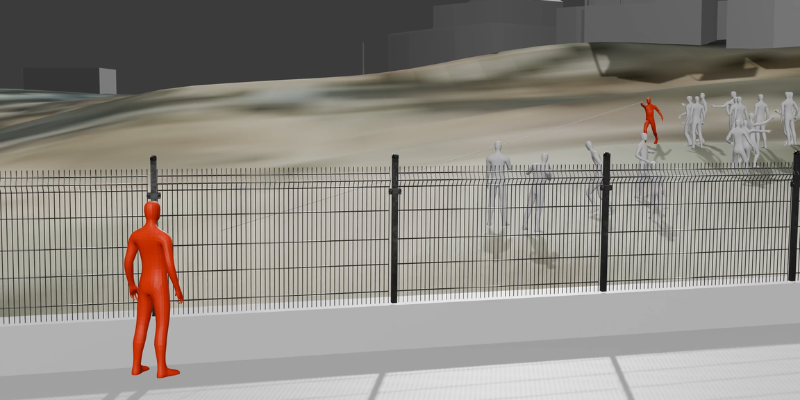
On 28 July 2025, Palestinian human rights defender Awdah Hathaleen was killed by a 9mm bullet wound to the heart when Israeli settler Yinon Levi fatally shot him while Hathaleen was documenting a settler attack on privately owned property belonging to residents of Umm Al-Kheir. His killing was not an isolated incident, but occurred against the backdrop of years of violence and restrictions targeting the village’s residents and their property. These practices have created a coercive environment, harsh living conditions, and have threatened the community’s continued presence on its land.
Awdah’s killing must therefore be understood within a broader context that extends well beyond the immediate circumstances of the incident. It reflects a systematic pattern of structural violence, one that Awdah himself had described just a day before his killing during a meeting with the Green Olive Solidarity Network. This pattern is sustained by Israel’s settler-colonial apartheid regime, which affords settlers protection and institutional support, enabling their violence to serve as an instrument for consolidating control over Palestinian land in the occupied West Bank.
This investigation's purpose extends beyond identifying Awdah’s killer, whose identity was known within hours of the incident. Instead, it was guided by a broader question: How does this system enable settler violence and deploy it as a means of dispossessing Palestinians and erasing their presence from the occupied West Bank?
Since Israel’s far-right government took office in 2022, the occupying power has accelerated its settler-colonial policies in both scale and intensity. Agricultural outposts have emerged as a central mechanism for seizing and controlling land, accompanied by organised violence perpetrated by settler groups, which has produced tangible shifts in Palestinian demographics. These practices have intensified amid the genocidal campaign against the Gaza Strip since October 2023. This systematic pattern is coordinated through interconnected networks of Israeli institutions, organisations, and individuals.
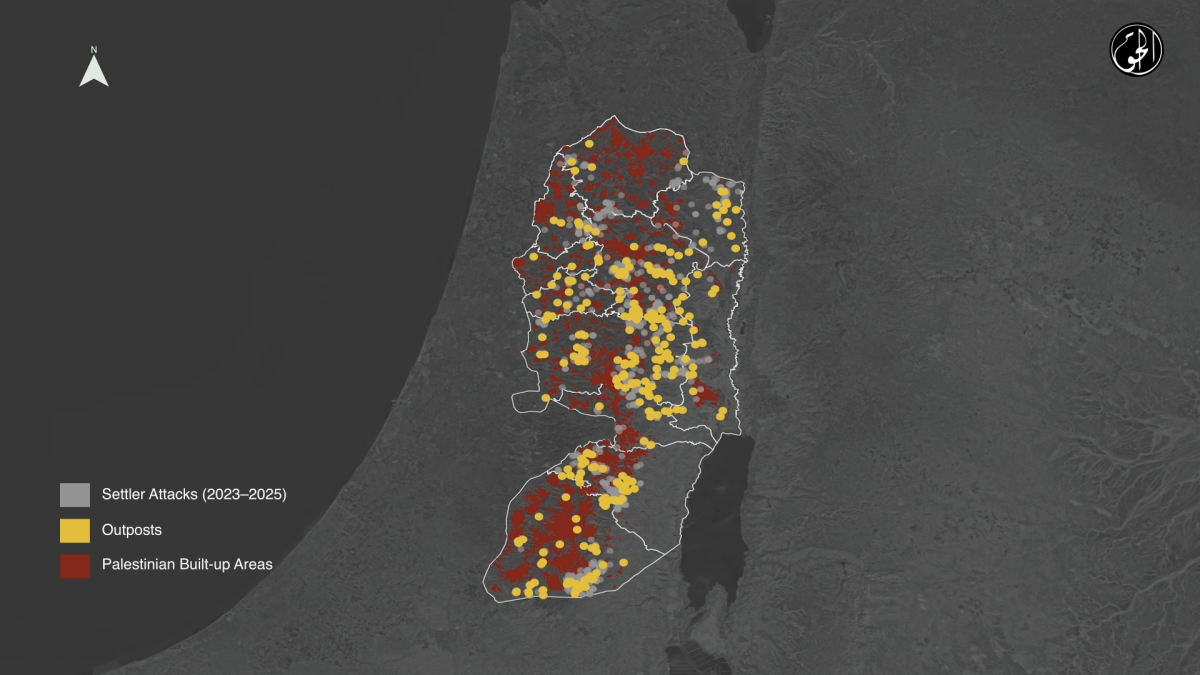
Al-Haq’s Forensic Architecture Investigation Unit (FAI) uses the killing of Awdah Hathaleen by settler Yinon Levi as a point of departure for examining how settlers’ systematic everyday practices intersect with the broader institutional apparatus advancing and entrenching settler-colonial apartheid and annexation in the occupied West Bank.
Methodology
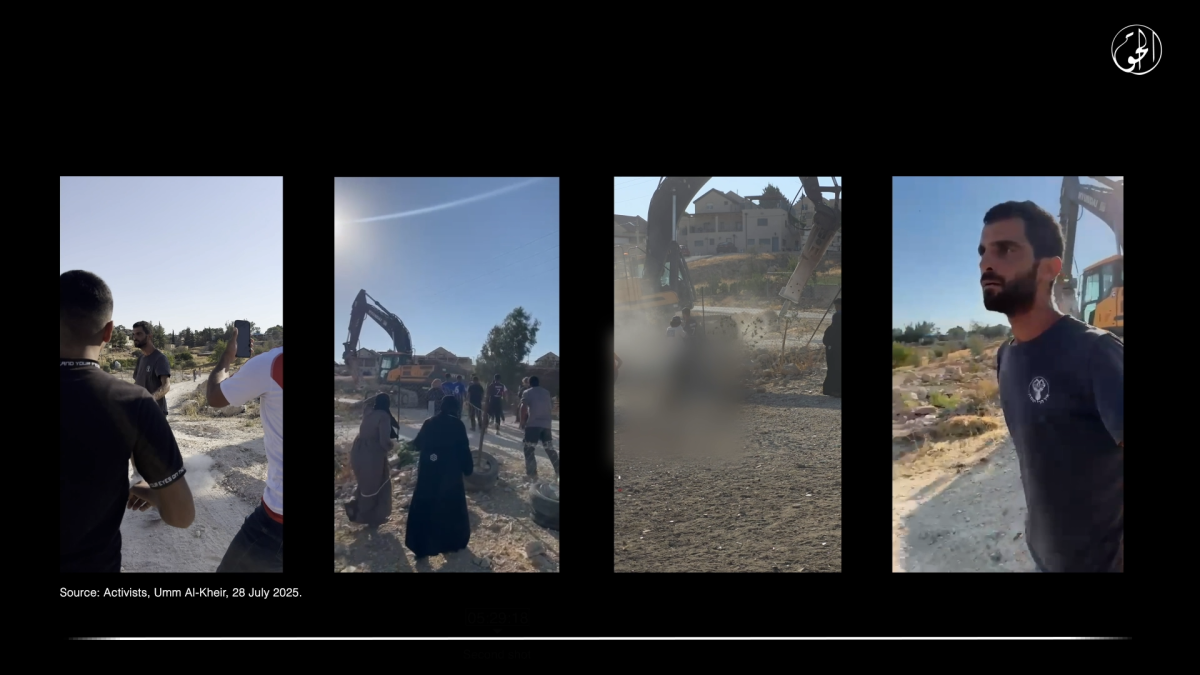
The investigation draws on a multi-source analysis of visual evidence collected by Al-Haq’s field researchers, alongside footage recorded by Palestinian and international activists and residents of Umm Al-Kheir. These materials are meticulously synchronised in time and space and integrated into a single, coherent sequence, allowing the various recordings to be analysed as interconnected evidence of the same incident rather than as isolated clips.
To strengthen the accuracy of the analysis, the crime scene is digitally reconstructed using a three-dimensional model of Umm Al-Kheir and the adjacent Israeli settlement of Carmel. The footage is then projected into the model, aligning the original camera angles with corresponding virtual viewpoints. This process enables precise geolocation of individuals, the reconstruction of lines of sight, and the simulation of the perpetrator’s position at the time the firearm was discharged.
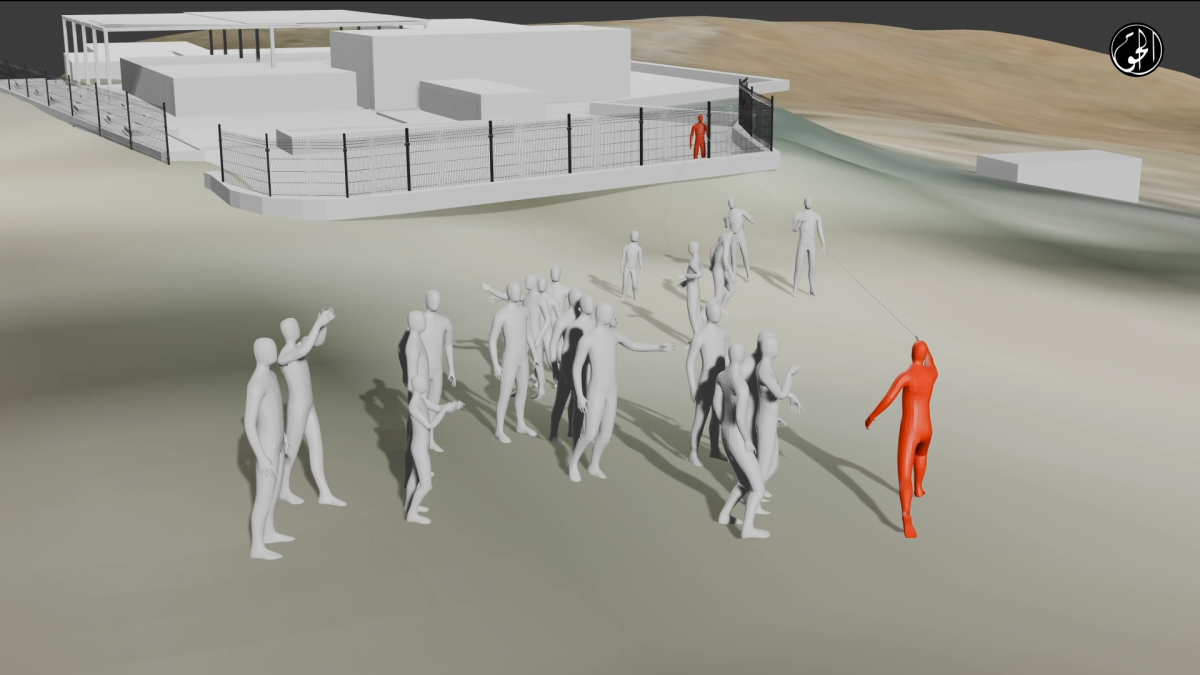
To assess the claim that the killing occurred in “self-defence” in response to stone-throwing, the investigation analyses the trajectories and timing of visible moving objects in the footage, including thrown stones, in relation to the wider sequence of events. This analysis enables the precise reconstruction of actions and responses and evaluates whether the official account is consistent with the verified visual evidence.
The investigation is organised around three interrelated levels of analysis:
- The incident: the killing of Awdah Hathaleen.
- The perpetrator: Yinon Levi, examined within a documented pattern of conduct.
- The Support system: the network of complicity associated with Hashomer Yosh “Guardians of Judea and Samaria”.
This framework situates the individual incident within the broader institutional and operational structures that enabled it.
The Incident: The Killing of Awdah Hathaleen
The investigation reconstructs the killing of Awdah through a detailed timeline that establishes the sequence of events, clarifies the circumstances surrounding the incident, and challenges the claim that the shooting occurred in “self-defence.”
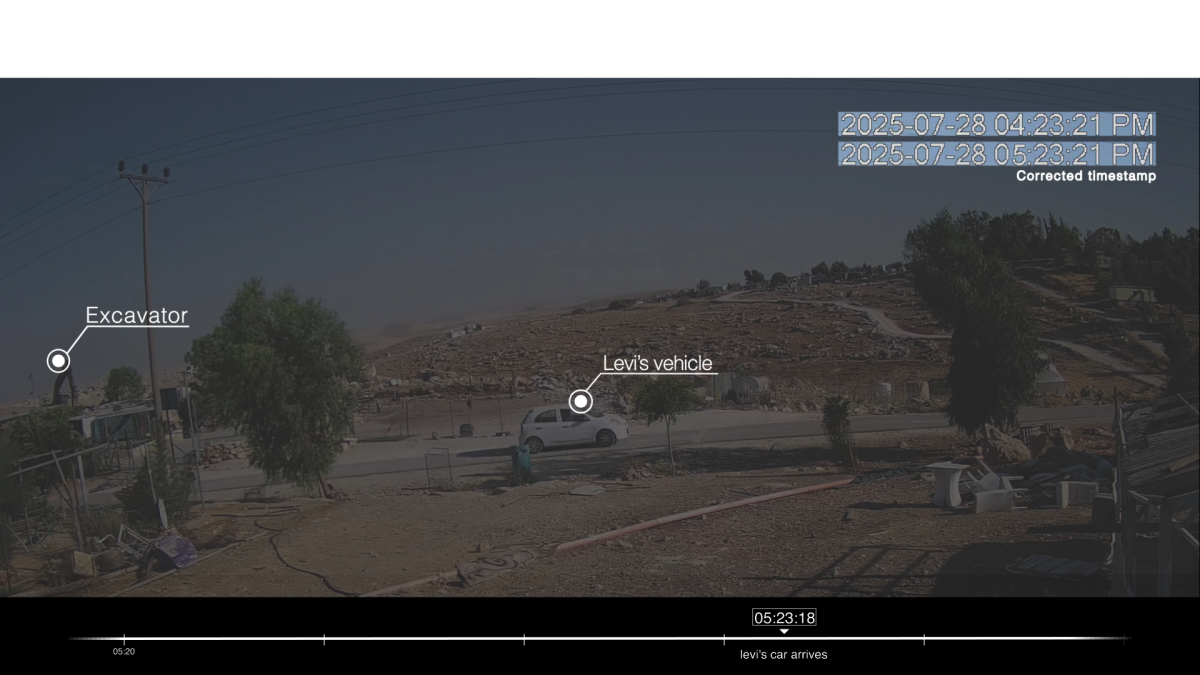
The incident was not the first offence linked to Yinon Levi. On 19 April 2024, the United States and the European Union imposed sanctions on him for his involvement in violent attacks against Palestinian communities near Meitarim Farm, the settlement outpost where he resides. The reported attacks included breaking into homes, damaging property, and unleashing dogs on Palestinian shepherds grazing livestock on privately owned Palestinian land.
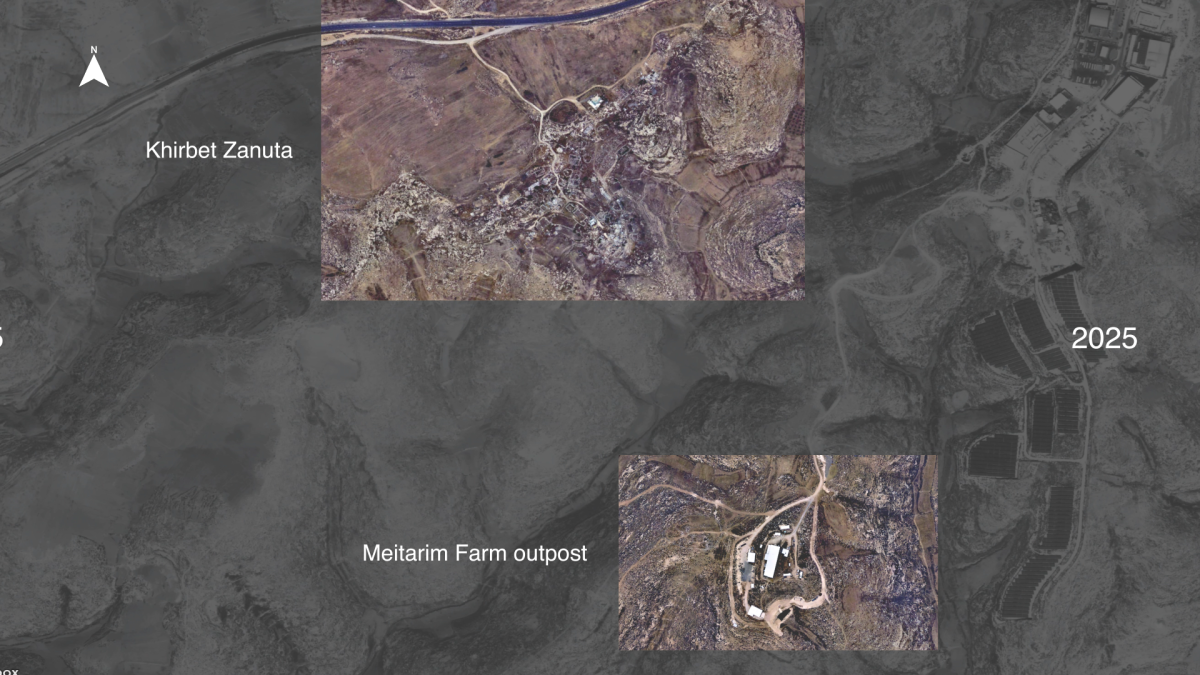
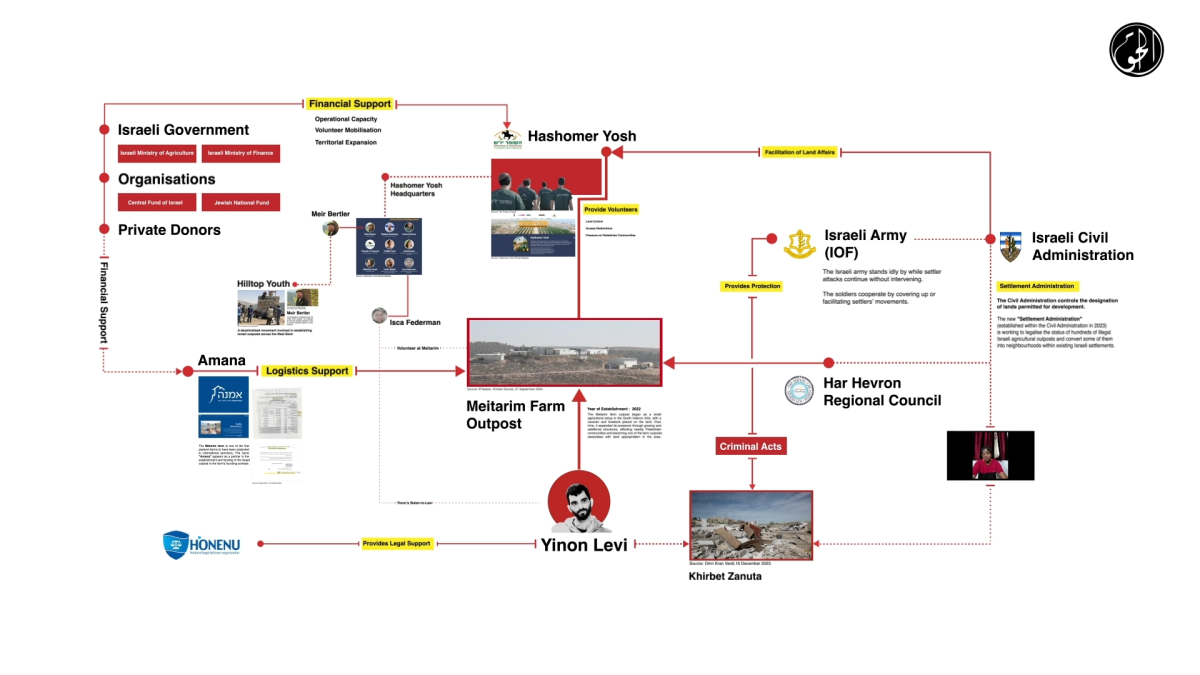
The evidence further indicates that Levi did not operate independently but was embedded within a broader support network. Meitarim Farm receives backing from Amana, a settlement development organisation, and hosts volunteers supplied by Hashomer Yosh, an organisation that provides personnel and logistical support to agricultural settlement outposts, some of whom have supported Levi’s activities.
The Perpetrator: Yinon Levi as a Representative Model
An examination of Levi’s conduct prior to the incident indicates that his actions form part of a systematic pattern sustained by an environment that enables settler violence, rather than the conduct of an isolated individual. This analysis illuminates the relationship between the individual perpetrator and the broader structure that provides him with resources, protection, and institutional support.
The Support System: The Network
Since its establishment in 2013, Hashomer Yosh “Guardians of Judea and Samaria” has played a central role in advancing agricultural outposts across the occupied West Bank. Although the organisation presents its mandate as combating “agricultural crime against settlers,” an examination of its activities reveals a role extending well beyond agricultural protection. Hashomer Yosh directly supports agricultural outposts and deploys volunteers whose activities have included acts of violence against Palestinians.
The organisation has, for example, supplied volunteers to outposts such as Meitarim Farm. In addition to herding livestock and guarding settlement outposts across the occupied Palestinian territory, these volunteers have participated in activities that contribute to the forcible displacement of residents from neighbouring Palestinian communities.
In August 2024, the United States sanctioned Hashomer Yosh as part of a broader series of measures targeting entities implicated in settler violence against Palestinian civilians in the West Bank. The organisation was designated for contributing to violence and instability in the region. The United Kingdom subsequently imposed sanctions on Hashomer Yosh in October 2024 as part of similar efforts to restrict support and funding for entities involved in settlement expansion and systematic violence against Palestinians.
These findings expose a significant disparity between Hashomer Yosh’s public characterisation of itself as an agricultural protection organisation and its documented role in sustaining and advancing agricultural outposts. Through the provision of personnel and material resources, the organisation facilitates the expansion of control over Palestinian land and obstructs Palestinian landowners’ return to their property. Its activities consequently advance objectives pursued by Israel’s settler-colonial apartheid regime in the West Bank.
Hashomer Yosh does not operate independently but forms part of a wider network whose actors perform complementary roles at both operational and institutional levels. On the ground, its activities intersect with those of Hilltop Youth groups, whose members use violence, intimidation, and coercive practices to displace Palestinians and consolidate settlement expansion around agricultural outposts, often in the presence and under the protection of the Israeli Occupying Forces (IOF).
At the administrative level, the Israeli Civil Administration provides the legal and procedural framework that enables these realities to persist and become entrenched. The Amana organisation, meanwhile, plays a central logistical role in establishing and supporting the outposts. Financial and material support also flows through official channels, including the Ministry of Agriculture, the Central Fund of Israel, and the Jewish National Fund. Together, these relationships demonstrate the structural interdependence between state institutions and non-state actors in consolidating control over Palestinian land.
Summary of Findings
The evidence gathered in our investigation conclusively demonstrates that:
- Awdah Hathaleen was fatally shot by a live round discharged by settler Yinon Levi.
- The shooting occurred in the absence of any imminent threat to Levi’s life. No armed individuals were present in the vicinity, and Awdah posed no danger at the time he was shot.
- Levi demonstrated intent to commit criminal acts prior to any interaction with the residents.
- The conduct of IOF and Israeli police forces present at the scene indicates operational alignment with the settlers’ actions, manifested through the provision of protection and the absence of law enforcement measures against settlers, who were not treated as criminal suspects.
These findings are situated within a broader operational context involving structured support for settler activity across the occupied West Bank:
- Yinon Levi is identified as a key settler actor in the southern West Bank, directly linked to the displacement of Palestinian communities through practices that create a coercive environment and facilitate the expansion of agricultural outposts.
- Yinon Levi is responsible for Meitarim Farm, a settlement outpost linked to the organisation Hashomer Yosh, which provides volunteers supporting the agricultural outposts in the West Bank.
- Hashomer Yosh “Guardians of Judea and Samaria” is part of a broader support system that facilitates and sustains settlers’ agricultural outposts across the occupied West Bank.
Collectively, the reconstruction of Awdah Hathaleen's killing demonstrates how an individual act of lethal violence was enabled by a broader system of institutional support, operational coordination, and state protection. By situating the incident within this wider framework, the investigation shows that settler violence functions not merely as a series of isolated criminal acts, but as a mechanism through which settlement expansion and the dispossession of Palestinians are advanced throughout the occupied West Bank.